The Shabnam biography chronicles the extraordinary, triumphant life of one of the most iconic and beloved actresses in South Asian cinema history. Born Jharna Basak on August 17, 1946, in Dhaka, she rapidly rose to unprecedented heights of fame and cultural influence across both Bangladesh and Pakistan. Widely revered for her deeply expressive acting and timeless, classic beauty, she became a massive cinematic legend during the 1960s, 1970s, and 1980s. Her immense, groundbreaking contributions to the regional film industry have left an enduring, powerful legacy that effortlessly transcends geographical borders.

Shabnam's phenomenal career is strongly marked by her incredible artistic versatility and an unparalleled, magical ability to connect with highly diverse international audiences. She initially found major commercial success in Bengali films before successfully transitioning to the booming Urdu film industry in West Pakistan, where she became an absolute reigning superstar. Her unwavering dedication to her artistic craft is vividly reflected in her extensive, diverse filmography, which proudly boasts over 150 acclaimed feature films. She incredibly holds the remarkable, undisputed distinction of being a top leading romantic actress for nearly three full decades.

Today, the legendary Shabnam is celebrated globally not only as a brilliant, trailblazing artist but also as a powerful symbol of quiet resilience, survival, and immense grace. Her eventual, highly anticipated return to her homeland of Bangladesh marked a deeply poignant, full-circle moment in her long, illustrious life. The remarkable Shabnam biography remains a deeply fascinating exploration of a pioneering, courageous woman who successfully conquered two completely distinct cinematic worlds through her sheer talent, hard work, and unyielding perseverance.
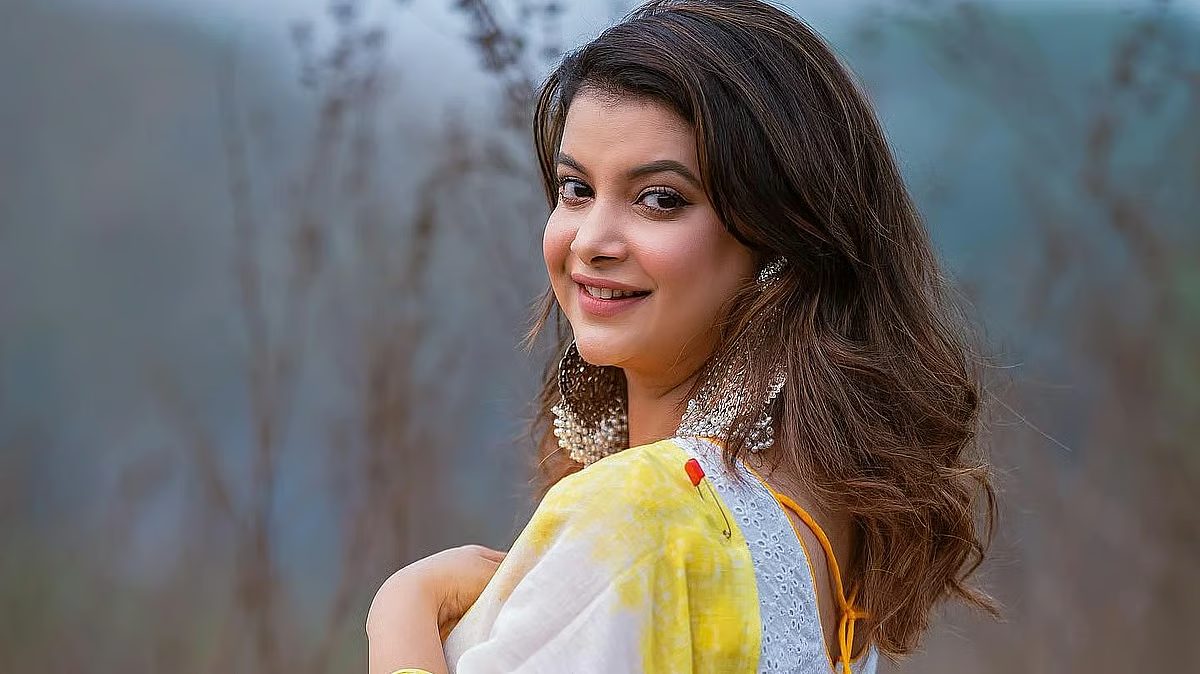
👤 Profile at a Glance

Full Name Jharna Basak
Nickname Shabnam
Date of Birth August 17, 1946
Age 79 years old
Birthplace Dhaka, Bangladesh
Nationality Bangladeshi
Profession Actress
Education Bulbul Lalitakala Academy
Marital Status Widowed
Spouse / Partner Robin Ghosh
Children 1

🎓 Education

Shabnam's formal training in the performing arts began when her father enrolled her at the prestigious Bulbul Lalitakala Academy in Dhaka. This esteemed institution provided her with rigorous, traditional training in classical dance, setting the stage for her future career.

Her dedicated time at the academy honed her artistic sensibilities and gave her the necessary confidence to perform publicly. It was her exceptional, highly expressive dancing skills, cultivated at the academy, that ultimately caught the attention of major film directors.

💼 Career

Shabnam's remarkable entry into the highly competitive film industry occurred serendipitously when a close friend of her father offered her a small, brief part as a background dancer. She enthusiastically made her initial on-screen cinematic appearance in the highly acclaimed Bengali film Ei Desh Tomar Amar. This minor role was quickly followed by another prominent dance sequence in the popular film Rajdhanir Bukey, where her highly expressive performance became an instant, massive hit with local audiences.

Responding immediately to intense public demand, leading film directors quickly began casting her in prominent leading roles. She proudly made her official, highly anticipated debut as a leading heroine in the massively successful Bengali film Harano Din. Her ultimate career breakthrough, however, arrived when visionary director Ehtesham expertly cast her in the landmark Urdu-language film Chanda in 1962, prompting her to courageously relocate to West Pakistan.

Despite initially struggling significantly with the complex Urdu language, Shabnam meticulously memorized all her intricate lines written phonetically in Bengali script. The movie Chanda proved to be an absolute, massive commercial success, instantly catapulting her to unprecedented stardom in the booming Pakistani film industry, widely known internationally as Lollywood. By the early 1970s, she had undeniably become the absolute undisputed number-one leading actress in Pakistan, successfully starring opposite major, legendary actors like Waheed Murad.

She masterfully dominated the highly lucrative Pakistani box office for over two full decades, consistently delivering unforgettable, highly emotional performances in massive blockbuster films such as Aina. She proudly holds the historic, undisputed record for winning an incredible 13 Nigar Awards, which represents the absolute highest cinematic honor in the entire Pakistani film industry. In the late 1980s, the versatile Shabnam smoothly transitioned into deeply complex character roles, gracefully dividing her professional time between productions in Lahore and Dhaka.

Shabnam officially and gracefully retired from the fast-paced Pakistani film industry and permanently returned to her native homeland of Bangladesh in 1997. Following a brief, quiet personal hiatus, she successfully made a deeply triumphant, highly celebrated comeback to mainstream Bengali cinema with the 1999 massive blockbuster movie Ammajan. Though largely retired from active acting today, her monumental, lasting impact on South Asian cinema continues to be widely celebrated and deeply honored internationally.

🏠 Personal Life

Shabnam was born into a respected Bengali Hindu family in Dhaka, during the turbulent era of British India. Her father, Nani Basak, was a well-known, highly respected professional football referee. Growing up, she was described as remarkably adventurous and deeply passionate about competitive dance, supported fully by her family's strong encouragement of the performing arts.

In 1966, Shabnam married the highly renowned, legendary music composer Robin Ghosh, whose musical genius often perfectly complemented her cinematic performances. Their highly supportive partnership was widely admired, and Robin famously composed the hit music for several of her most successful films, including Chanda. The loving couple welcomed one son, Ronnie Ghosh, and remained deeply devoted to each other throughout their remarkable lives.

Shabnam faced immense, harrowing personal tragedy and trauma when she survived a horrific, violent armed assault in her Lahore home in 1978. Despite facing unimaginable adversity and navigating a highly flawed legal system, she demonstrated incredible, inspiring courage. She eventually chose to leave Pakistan entirely in the late 1990s, permanently returning to Bangladesh to lovingly care for her aging parents.

Following her graceful retirement, Shabnam devoted her entire time to her close-knit family in Dhaka. She cared deeply for her beloved husband, Robin, until his deeply mourned passing due to respiratory failure in February 2016. Today, she proudly lives a quiet, highly private life, occasionally participating in major cultural honors and retrospective interviews celebrating her enduring cinematic legacy.

🏆 Achievements & Awards

  • 13 Nigar Awards for Best Actress
  • Lifetime Achievement Award from Pakistan Television (2012)
  • Lux Style Lifetime Achievement Award (2019)
  • Sitara-i-Imtiaz from the President of Pakistan (2024)

💬 Notable Quotes

I feel great in Karachi. It has completely changed. It has become more beautiful.

— Jharna Basak

The Bangladeshi government provides producers with finances through a proper system, and it encourages filmmakers.

— Jharna Basak

God has blessed me a lot. I am simply enjoying my peaceful life.

— Jharna Basak

❓ People Also Ask

She is a legendary actress who became the reigning superstar of the Pakistani and Bangladeshi film industries for nearly three decades.
Born on 1946-08-17, Shabnam is 79 years old as of 2026.
While her exact net worth is undisclosed, she earned significant wealth as the highest-paid actress in Lollywood during her prime.
She was born in Dhaka, Bengal, during the historical era of British India.
She was married to legendary music composer Robin Ghosh until his deeply mourned passing in 2016.
She holds the historic record for winning 13 Nigar Awards and recently received the Sitara-i-Imtiaz from the President of Pakistan.